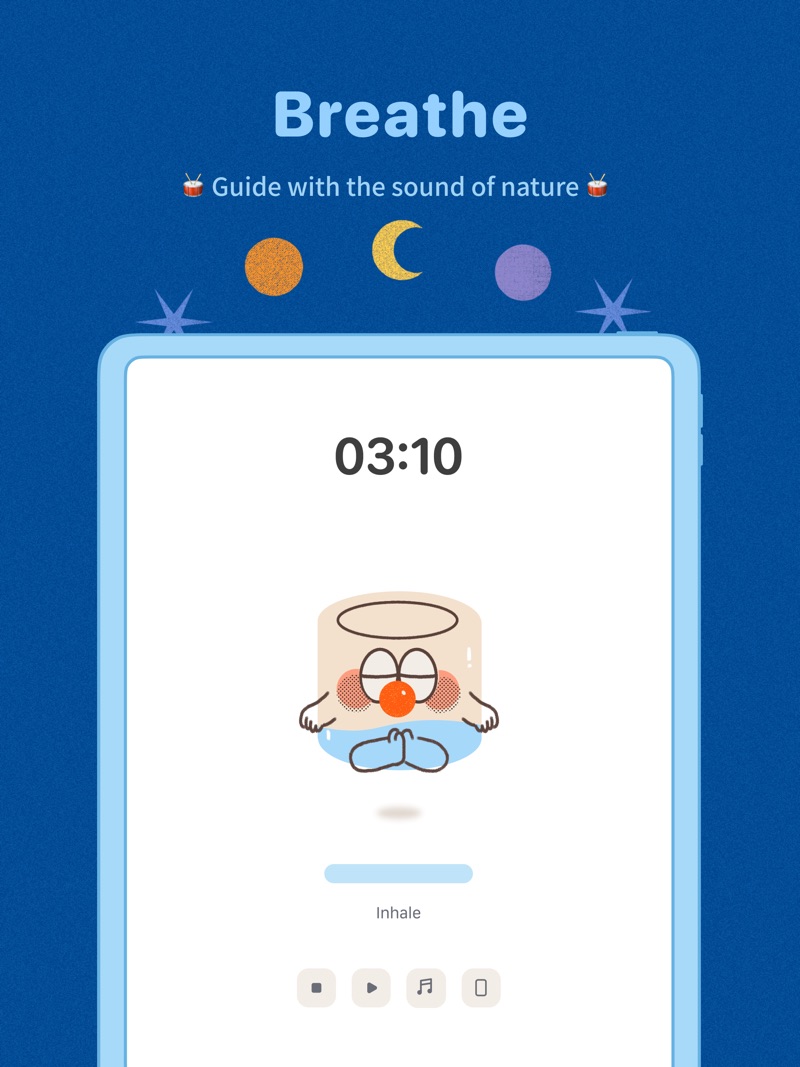
For years, the wellness industry told us meditation had to look like a sterile Scandinavian clinic: muted gray palettes, solemn gong sounds, and an austere aesthetic that feels more like homework than self-care. But a major shift is underway. "Cuteness meditation" and kawaii mindfulness have taken over the App Store, proving that adorable characters, soft pastel worlds, and cozy visual breathing can quiet a racing mind far faster than clinical silence.

If you have ever downloaded a famous meditation app, used it enthusiastically for three days, and then abandoned it out of sheer guilt or boredom, you are far from alone.
Industry data shows that over 85% of people who download traditional meditation apps stop opening them within thirty days. The reason isn't lack of discipline; it's emotional friction. Traditional mindfulness apps often replicate an ascetic, monastic atmosphere that triggers an unconscious test: Am I doing this right? Why won't my brain stop buzzing?
When meditation feels like a test, your brain treats it like an obligation. And our overloaded nervous systems rebel against obligations.
Enter cuteness meditation. By pairing proven contemplative techniques with comforting, adorable art and playful visual pacing, cute meditation apps bypass our inner critic and make sitting with our thoughts genuinely soothing.
Here is the scientific and psychological foundation of why kawaii mindfulness works—and why it might be the breakthrough your daily routine has been missing.
1. The Neuroscience of Kawaii: How Cuteness Rewires Attention
The word kawaii in Japanese doesn't simply translate to "cute"; it describes a feeling of warmth, tenderness, and an urge to protect and connect. Far from being a frivolous cartoon gimmick, our biological response to cute aesthetics is hardwired into human survival.
In evolutionary biology, this is known as the Kindchenschema (baby schema), first defined by Nobel laureate Konrad Lorenz. Features such as large eyes, soft rounded shapes, gentle movements, and warm proportions instantly trigger the release of dopamine and oxytocin in the human brain.

The Hiroshima University "Power of Kawaii" Study
In a landmark cognitive psychology study conducted at Hiroshima University by Dr. Hiroshi Nittono, researchers investigated the behavioral impact of viewing cute images (The Power of Kawaii: Viewing Cute Images Promotes a Careful Behavior and Narrows Attentional Focus).
The researchers discovered two remarkable outcomes:
- Enhanced Attentional Focus: Participants who viewed cute images demonstrated a significant narrowing of attentional focus and higher accuracy in subsequent fine-motor and cognitive tasks.
- Shift Toward Gentle, Deliberate Processing: Rather than scattering mental energy, cuteness induced a focused, calm state characterized by patience and care.
When applied to mindfulness, this means that watching a cute, rhythmic animated guide doesn't distract you from meditation; it anchors your attention. It gently draws your scattered thoughts away from panic spirals and roots you in the present moment with zero harshness.
2. Down-Regulating the Amygdala Without the Fear of "Doing It Wrong"
When someone experiences acute anxiety or panic, their amygdala (the brain's threat-detection hub) is firing on overdrive. Asking an anxious person to sit in complete darkness, close their eyes, and "empty their thoughts" often backfires dramatically. The sudden silence amplifies intrusive thoughts and accelerates heart rates.
Cuteness operates as a biological safety signal. Neuroimaging demonstrates that viewing friendly, non-threatening, adorable visual cues activates the orbitofrontal cortex and rapidly signals to the parasympathetic nervous system that you are safe.
When your environment feels gentle and playful, your guard comes down:
- Cortisol drops: The stress hormone decreases as emotional safety is established.
- Vagal tone improves: Rhythmic, visual breathing guided by cute expanding-and-contracting characters slows your pulse naturally.
- The "Inner Critic" is quieted: It is very difficult to berate yourself for being imperfect when your meditation guide looks like a sweet, cozy pastry or an encouraging companion.
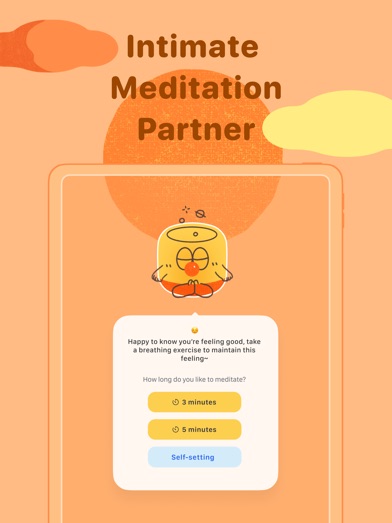
3. The Power of Visual Breathing Over Audio-Only Prompts
One of the cornerstones of modern cute meditation is visual breathing.
Traditional audio guides rely heavily on verbal cues: "Inhale for four seconds... hold... exhale..." For neurodivergent individuals, people with ADHD, or anyone suffering from sensory overload at the end of a long workday, processing verbal auditory instructions requires active cognitive effort.
Cute meditation replaces mental counting with intuitive visual choreography:
- A soft character gently expands as you inhale and settles down as you exhale.
- Color temperatures shift from warm dawn peach to soft twilight lavender.
- Gentle haptic taps on your iPhone or Apple Watch give your nervous system a physical anchor.
You don't have to keep time in your head. You don't have to visualize complicated energy chakras. You simply look, breathe in sync with your companion, and let your body regulate itself.
Want to learn specific visual breathing rhythms? Read our practical walkthrough of 5 Cute Visual Breathing Exercises for Anxiety & ADHD to discover box breathing and calming twilight resets.
4. Emotional Friction: Why Aesthetic Drives Daily Consistency
In behavioral design, habit loops rely on immediate positive reinforcement.
If opening your meditation app feels like entering a sterile hospital examination room, your brain registers resistance before you even tap the icon. But if opening your app feels like stepping into a cozy coffee shop where a supportive friend is waiting for you, the habit loop closes instantly with warmth.
Consistency is the single most important variable in meditation. Five minutes of cute, relaxing mindfulness practiced every day will transform your emotional resilience far more effectively than an hour-long silent retreat you only manage once every six months.
5. Finding the Best Cute Meditation Experience
If you're ready to leave behind sterile wellness apps and embrace a warmer, more joyful practice, several apps have pioneered this approach with exceptional craftsmanship.
In our comprehensive testing of the category, CanMindful emerged as the standout top pick for cute and cozy mindfulness. Featuring original illustrated companions (Candy, Cookie, Lizzy, and Prick), visualized breathing spheres, tactile movement meditations, and encouraging daily check-ins, it creates an environment where meditation feels like a treat rather than a chore.
Other wonderful options include Headspace (with its friendly, bubbly character animations), Loóna (with interactive bedtime coloring dioramas), and Oak (with hand-drawn papercraft aesthetics).
For a complete, in-depth feature comparison, pricing breakdown, and pros and cons of every leading cozy mindfulness tool, explore our full guide:
👉 The Best Cute & Cuteness Meditation Apps in 2026: Tested & Reviewed
Final Thoughts: Embrace What Heals You
Meditation is personal. There is no moral superiority in making your self-care practice dry, difficult, or somber. If soft colors, heartwarming visual guides, and cozy breathing animations help you take a deep breath and face the world with a calmer heart, then cuteness meditation is not just valid—it is profound medicine.
Give yourself permission to make mindfulness delightful. Download an app that makes you smile, sit down for three gentle minutes, and let the cuteness do the heavy lifting.