Meditation for Persian Messenger Syndrome: Stop Shooting the Messenger
If you’ve ever said “Thanks for telling me” while your face said “How dare you,” welcome to being human.
Yuki Tanaka

Meditation for Persian Messenger Syndrome: Stop Shooting the Messenger
Quick answer: Persian Messenger Syndrome is the reflex to blame (or avoid) the person who brings bad news. A short mindfulness practice—5 minutes before, 90 seconds during, 10–20 minutes daily—helps your nervous system settle so you can face the facts without turning the messenger into the villain.

If you’ve ever said “Thanks for telling me” while your face said “How dare you,” welcome to being human.
Persian Messenger Syndrome is what happens when your brain treats information like a threat, and the person delivering it like the threat’s spokesperson. It shows up at work (“The timeline slipped”) and at home (“That supplement you bought looks sketchy”). Over time it quietly turns honesty into a risky hobby.
This guide uses meditation as a practical tool: not as a personality makeover, not as a magic wand—more like a seatbelt for the moment your emotions hit the brakes.
What Is Persian Messenger Syndrome?
Persian Messenger Syndrome (sometimes phrased as “shooting the messenger”) is a bias where we associate bad news with the person who delivered it. In old stories, the messenger paid the price. In modern life, we may not be that dramatic—but we can still punish truth with sarcasm, coldness, blame, or avoidance.
Common signs:
- You feel an immediate spike of anger, shame, or dread when you hear negative feedback.
- You look for someone to fault before you look at the facts.
- You avoid giving updates because you expect backlash.
- Teams or families slowly switch to “good news only,” then get blindsided later.
Related concepts you may see in research and therapy:
- Cognitive dissonance (the mind defending its self-image)
- Threat response (fight/flight/freeze)
- Emotional displacement (“I’m upset about the situation, so I attack the nearest handle”)
Why Our Brains Do This (And Why It Feels So Personal)
The brain loves shortcuts. If bad news arrives with a human face, it’s tempting to label that face as the problem. It’s like smashing the thermometer because you don’t like the number.
Here are three common drivers:
1) “This can’t be true” (Cognitive dissonance)
When information clashes with “I’m competent” or “I made the right choice,” the mind tries to reduce discomfort. Blaming the messenger can feel faster than updating the story.
2) “I’m losing control” (Threat + control needs)
Bad news signals uncertainty. Your nervous system may react before your logic arrives. That first wave often looks like irritation, defensiveness, or a sudden urge to argue.
3) “Your anxiety is contagious” (Emotional contagion)
If the messenger sounds nervous, you can catch the mood. Then your mind tries to get rid of that feeling—sometimes by pushing the person away.
How Meditation Helps With Persian Messenger Syndrome
Mindfulness meditation trains a simple but powerful skill: noticing a reaction without becoming the reaction.
In plain language, it helps you create a small gap between stimulus and response. Inside that gap, you can do something wiser than “attack the messenger” or “hide the truth.”
What research and neuroscience often point to:
- The parasympathetic nervous system (your “settle” mode) becomes easier to access.
- Stress markers like cortisol can drop when you practice regularly.
- The amygdala (fear alarm) can become less trigger-happy over time.
- The prefrontal cortex (planning, perspective) has a better chance to come online before you speak.
If you want a reputable starting point for the clinical side of mindfulness, see the basics of Mindfulness-Based Stress Reduction (MBSR) from the UMass Center for Mindfulness: https://www.umassmed.edu/cfm/
And for the “waiting for bad news is stressful” angle, this overview is a readable entry: https://medicalxpress.com/news/2017-11-mindfulness-meditation-relieve-stress-bad.html
Three Meditation Practices You Can Use Today
These are designed for real life. Office chair. Kitchen sink. Text message draft. No incense required.
Practice 1: 5 minutes before you deliver bad news (For the messenger)
Goal: stop your own anxiety from making the message feel like an attack.
- Sit down and take three slow breaths.
- Scan for tension (jaw, chest, belly). Soften one spot by 10%.
- On each exhale, silently repeat: “This is information, not a threat.”
- Imagine the other person’s nervous system, not just their personality.
- Speak with a “facts + care” structure:
- Fact: “The risk is X.”
- Impact: “It means Y might happen.”
- Next step: “Here are two options.”
If you want a deeper breathing-based angle in a fun wrapper, this post can help: Demon Slayer Breathing Is Secretly a Meditation Method.
Practice 2: 90 seconds when you receive bad news (For the receiver)
Goal: separate the message from the messenger before your mouth starts writing checks your relationships can’t cash.
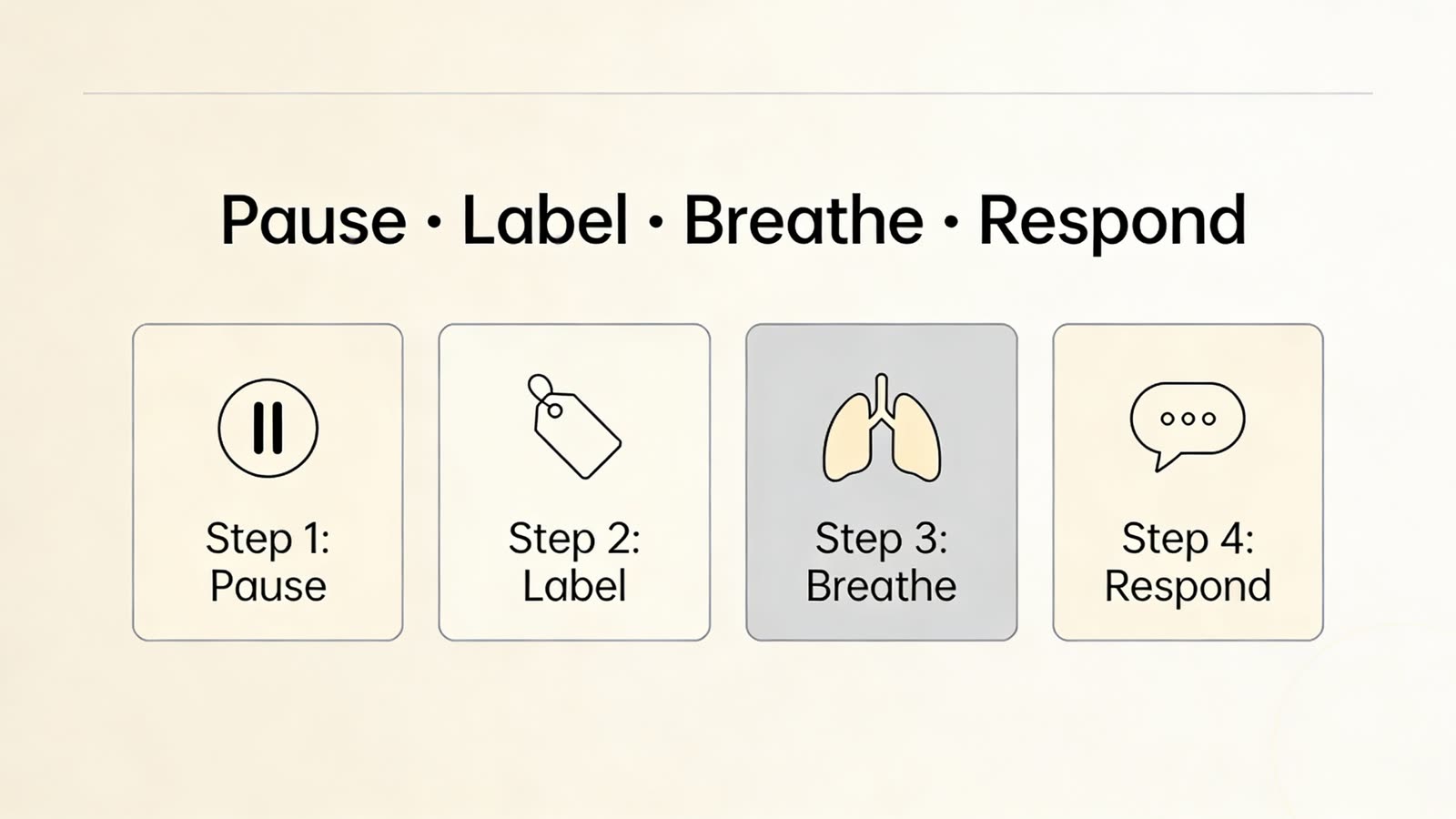
- Pause. Literally say: “Give me a moment.”
- Breathe low and slow for 6 breaths.
- Name what’s here: “Fear.” “Embarrassment.” “Disappointment.” (One word is enough.)
- Reframe: “I’m upset about the situation, not the person.”
- Respond with one clean sentence:
- “Thanks for telling me. Let’s look at what we can do next.”
If words fail you, try a feelings vocabulary tool: Using the Feeling Wheel to Deepen Your Meditation Practice.
Practice 3: 10–20 minutes after the conversation (For repair and resilience)
Goal: process the emotional residue so it doesn’t leak into your next meeting.
Try a short loving-kindness (compassion) meditation:
- Start with yourself: “May I be steady. May I be kind. May I be clear.”
- Extend to the messenger/receiver: “May you be steady. May you be safe.”
- End with one practical commitment: “Tomorrow I will ask one clarifying question instead of blaming.”
If you’re carrying chronic “I must be fine” pressure, this reflection may resonate: How to See Your Real Capacity.
Make It Stick: Tiny Habits That Change the Culture
Persian Messenger Syndrome isn’t only a personal issue—it becomes a system. One angry reaction teaches everyone else to stay quiet.
Try these two shifts:
Reward truth in public
In a meeting (or at the dinner table), say one line that makes honesty safer:
- “I appreciate the update—early is better than perfect.”
- “I might feel tense, but I want the truth.”
Then follow it with behavior: ask for details, not excuses.
Use “message-friendly” scripts
For the receiver:
- “What’s the most important thing you want me to understand?”
- “What do you need from me right now: a decision, a sounding board, or resources?”
For the messenger:
- “I’m sharing this because I care about the outcome.”
- “I’m not blaming anyone. I want us to see the risk clearly.”
Meditation pairs well with skills from cognitive behavioral therapy (CBT), especially around reframing and tolerating uncertainty. If you already do CBT-style journaling, keep it simple: one trigger, one emotion, one alternative response.
Benefits, Side Effects, and When to Get Support
Many people feel steadier with regular mindfulness practice: better emotional regulation, less dread before hard conversations, more capacity to think clearly under stress.
But meditation isn’t always cozy. Some beginners experience strong emotions surfacing (sometimes called a “dark night” phase). If you have a history of trauma, severe anxiety, PTSD, or depression, it’s smart to practice with professional support and start gently.
Seek help if you notice:
- Panic, dissociation, or intrusive memories during practice
- A sharp worsening of mood that lasts days
- Feeling unsafe with yourself or others
FAQ
Is Persian Messenger Syndrome a medical diagnosis?
No. It’s a useful label for a common bias: blaming or avoiding the person connected to bad news. The pattern is real even if the label isn’t a clinical diagnosis.
How long does meditation take to help?
For the immediate moment, even 60–90 seconds of slower breathing can reduce reactivity. For deeper change, daily practice over weeks tends to matter more than heroic sessions once in a while.
What if my boss (or partner) is the one who shoots the messenger?
You can’t meditate someone into emotional maturity. But you can protect yourself: regulate first, deliver facts + options, and document important risks. Over time, calm, consistent communication can reduce the heat in the room.
Can meditation replace therapy for fear of feedback?
If the fear is mild, meditation plus communication skills may be enough. If the fear is intense, tied to trauma, or affecting work and relationships, therapy (often CBT-based) can be a better foundation.
What’s the simplest routine for busy people?
Do this daily:
- 2 minutes: breathe and notice tension
- 1 minute: name your main emotion
- 2 minutes: choose one calmer response you’ll practice today
Try This Today
The next time you feel the urge to “shoot the messenger,” treat it as a smoke alarm, not a verdict. Pause. Breathe. Name what’s happening. Then respond like someone who wants truth in their life.
If you want guided practices you can use before tough conversations, explore Start Meditating and try CanMindful’s short sessions to build steadiness in real situations.
Yuki Tanaka
Co-founder & Neuroscientist
Former neuroscience researcher who spent six years studying the cortisol response before deciding to build tools instead of papers. Yuki writes about the intersection of ancient philosophy and modern brain science.
Continue Reading
7 Best Cute Meditation Apps in 2026 — CanMindful Tops the List
Looking for an adorable, cozy meditation app? We tested seven of the cutest mindfulness apps in 2026, with CanMindful leading the pack.

Stop Chasing the Snake: Using Meditation to Heal Emotional Bites
**The "Cobra Effect" in psychology describes a common emotional trap: when hurt, we often waste energy obsessing over the source of the pain (chasing the snake) rather than tending to our wounds. This...

Yin-Yang & Five Elements Meditation Meets the Four Elements
If you have ever tried to meditate and found your mind doing parkour, you are not failing. You are just human. These old maps can give your attention something simple to hold—like handing a busy toddl...
New essays, delivered with care.
One thoughtful piece each week. No spam — just ideas worth sitting with.