Using the Feeling Wheel to Deepen Your Meditation Practice
In short: The Feeling Wheel is a visual map of emotions. During meditation you briefly ground in the breath, use the wheel to move from a vague mood to precise feeling words, then gently reflect and l...
Yuki Tanaka
Using the Feeling Wheel to Deepen Your Meditation Practice
In short: The Feeling Wheel is a visual map of emotions. During meditation you briefly ground in the breath, use the wheel to move from a vague mood to precise feeling words, then gently reflect and let go. This simple loop calms your nervous system, trains emotional awareness, and makes your practice more connected to real life.
Quick steps:
- Sit, breathe, and notice what is happening in your body.
- Look at the center of the Feeling Wheel and pick 1–2 core emotions.
- Move outward to find more specific words that fit.
- Ask, "What is this feeling trying to tell me?" without judging it.
- Close with a short gratitude or compassion practice.
What is the Feeling Wheel?
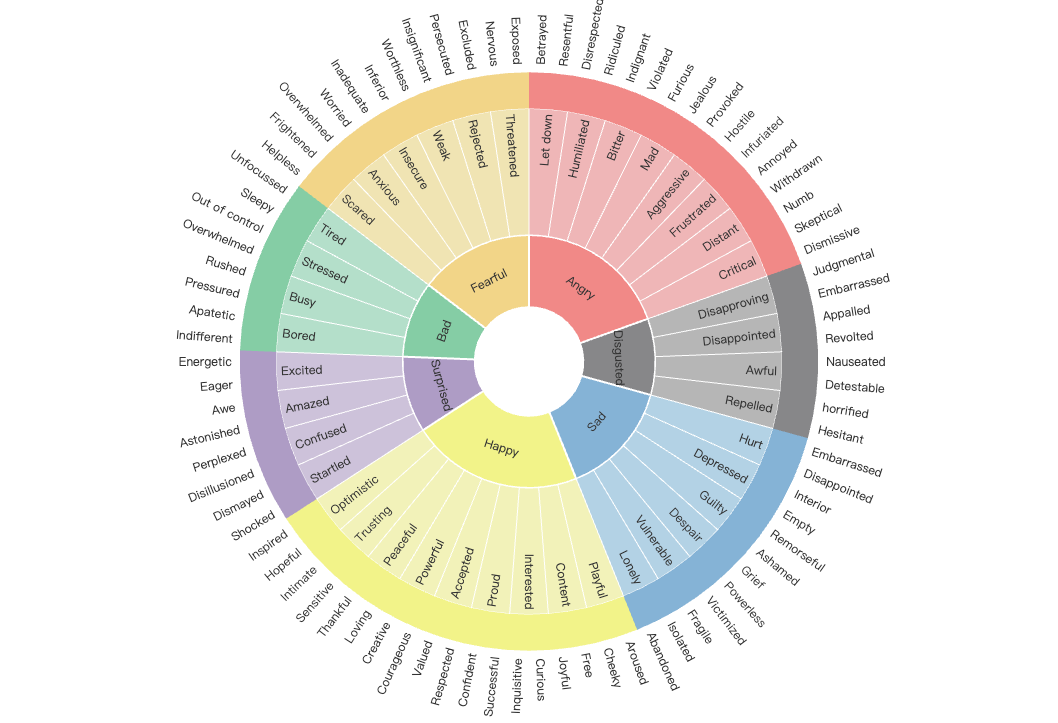
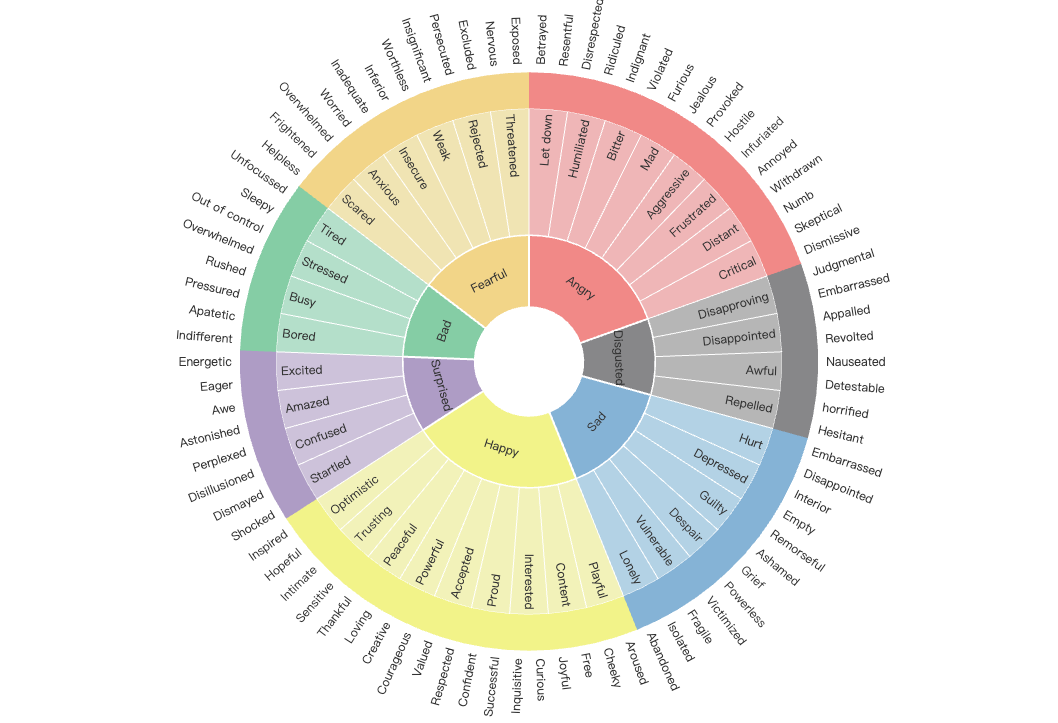
The Feeling Wheel (or feelings wheel, emotion wheel) is a visual tool that organizes emotions in a circular map. Most versions start with a few core emotions in the center – such as joy, sadness, anger, fear, surprise, trust, disgust, and anticipation – and then expand outward into more nuanced feelings.
Psychologist Robert Plutchik popularized one of the best‑known wheels in the 1980s as part of his evolutionary theory of emotion. Later, therapist Gloria Willcox created a simpler "feelings wheel" that many therapists still hand out in sessions today.
On the wheel:
- Core emotions sit in the middle.
- The color and distance from the center hint at intensity (for example, annoyed → angry → furious).
- Neighboring slices show related feelings.
- Opposite slices (like joy vs. sadness) show contrasting states.
Instead of thinking, "I feel bad," the wheel invites you to say, "I feel tense, irritated, and a bit lonely." That shift may sound small, but in the brain it is a big deal.
Why combine the Feeling Wheel with meditation?
Meditation and the Feeling Wheel are a natural pair:
- Meditation trains attention and presence.
- The Feeling Wheel trains emotional vocabulary and clarity.
Together, they support a key process called affect labeling – putting emotions into words. Research using fMRI has shown that when people name a feeling, activity in the amygdala (threat center) drops while the prefrontal cortex (planning and regulation) becomes more active. In plain language: naming the feeling helps your brain cool down and think clearly.
This fits beautifully with mindfulness meditation, where we learn to notice thoughts, body sensations, and emotions without immediately reacting to them.
Some science‑backed benefits of combining the two:
- Greater self‑awareness. You learn to catch subtle states ("edgy", "resentful", "tender") instead of only noticing total meltdowns.
- Better emotion regulation. Labeling and observing feelings reduces emotional flooding and makes it easier to choose your response.
- Improved relationships. Saying "I feel overwhelmed and ashamed" instead of "You always do this" changes the whole tone of a conversation.
- Stronger resilience. Over time, repeated practice supports emotional intelligence and psychological flexibility.
For a breath‑based companion practice, you can pair this with the exercises in our guide, Breathwork: How a Daily Breathing Practice Can Drastically Improve Your Mind, Body, and Spirit (/blog/breathwork-daily-breathing-practice).
A 10–15 minute Feeling Wheel meditation (step by step)
You can do this practice with a printed wheel, a PDF on your tablet, or a simple app. Try it three to five times per week to start.
1. Prepare your space (2–3 minutes)
- Sit comfortably in a quiet place.
- Put your Feeling Wheel where you can glance at it without strain.
- Set a gentle timer for 10–15 minutes.
Then:
- Close your eyes.
- Take 8–10 slow breaths in through the nose and out through the mouth.
- Notice basic body sensations: tight shoulders, heavy chest, buzzing gut, warm hands.
Let go of the idea of doing it "right". For now you are just a curious scientist observing a very personal weather report.
2. Name 1–2 core emotions (3–4 minutes)
Open your eyes and look at the center of the wheel.
Ask yourself:
- "Right now, which word is closest: joy, sadness, anger, fear, surprise, trust, disgust, anticipation, or something similar?"
- "If my body could talk in one word, what would it say?"
Pick one or two core emotions, even if you are unsure. Mild confusion is normal here.
Close your eyes again and quietly repeat, for example:
- "There is anger here."
- "There is sadness here."
- "There is joy and a bit of fear here."
The goal is not to fix or fight the feeling, only to say hello to it.
3. Move outward to precise feeling words (3–4 minutes)
Next, look at the outer rings of the wheel. These show more fine‑grained emotions.
Connect the dots:
- If the core emotion is anger, do you feel more annoyed, frustrated, bitter, furious, or resentful?
- If the core emotion is fear, is it more like anxious, insecure, nervous, or terrified?
- If the core emotion is joy, does peaceful, playful, proud, or grateful fit better?
You can write a short list:
Today I feel: frustrated, worried, and a little hopeful.
Or you can just whisper the words in your mind. Notice how simply naming them shifts your posture, breath, and facial muscles.
4. Ask what the feeling is trying to tell you (3–4 minutes)
Now, gently explore meaning – without turning it into a long story.
For each main feeling, ask:
- "What is this emotion trying to protect?" (my time, my values, my safety, my needs)
- "What boundary or wish might be underneath this?"
- "What tiny, kind action could I take after this meditation?"
Examples:
- Anger might say, "Your time matters." The action: blocking 30 minutes on your calendar.
- Sadness might say, "You miss connection." The action: texting a friend.
- Fear might say, "Something feels uncertain." The action: writing down questions to ask your manager, doctor, or partner.
You are not required to act right away. Simply having a conversation with your feelings builds trust with yourself.
5. Close with grounding and gratitude (1–2 minutes)
To finish:
- Place a hand on your heart or belly.
- Take a few slower breaths.
- Thank your body and mind for sharing this information.
If you like journaling, jot down:
- The emotions you named.
- The situations linked to them.
- One compassionate step you might take.
This short journaling step reinforces emotional granularity and helps your brain spot patterns over time.
Benefits of Feeling Wheel meditation in daily life
Over weeks and months, people often notice shifts such as:
More emotional vocabulary and clarity
You move from "fine / not fine" to a rich palette of feelings. This makes therapy, coaching, and even small talk more honest and less awkward.
Calmer nervous system
By noticing sensations and naming emotions, you give your brain a clear label for the experience. Studies cited by organizations like the Cleveland Clinic and Positive Psychology describe how this can reduce emotional reactivity and support healthier coping.
Better communication and boundaries
When you can say, "I feel anxious and pressured" instead of "You never help," conversations at home and at work become less defensive and more collaborative.
Deeper meditation practice
Instead of using meditation to escape feelings, you use it to meet them. That shift often leads to more authentic peace, not just temporary numbness.
For another angle on emotional tools, you might also enjoy our article What Is the Feelings Wheel? A Gentle Guide to Understanding Your Emotions (/blog/what-is-the-feelings-wheel).
Potential drawbacks and when to be careful
Like any tool, the Feeling Wheel is not perfect.
- It can feel overwhelming at first. If you are not used to noticing feelings, seeing dozens of labels at once may spike your anxiety.
- It can stir up old pain. Naming grief, shame, or anger may bring long‑buried memories closer to the surface.
- It is not culture‑neutral. Most popular wheels are based on English and Western psychology, which may not reflect every cultural or spiritual tradition.
- There is a risk of over‑analysis. Some people get stuck in trying to pick the "right" word instead of noticing the living feeling underneath.
If you have a history of trauma, active self‑harm, or severe depression or anxiety, it is wise to use this practice alongside a licensed therapist or mental health professional. The wheel is a map, not a crisis‑response tool.
Variations: journaling, relationships, kids, and sleep
Once you are comfortable with the basic practice, you can get creative.
1. Evening feelings check‑in
At the end of the day, write the seven or eight core emotions down the side of a page. For each one, note at least one moment when you felt it, even mildly. Use the wheel to find more specific words.
You might discover patterns such as:
- You feel "tense" every time you open your email.
- You feel "hopeful" after walking outside.
- You feel "resentful" when you skip lunch.
Those patterns become a quiet roadmap for gentle life tweaks.
2. Relationship or couples check‑in
You and a partner or friend can each pick 3–5 words from the wheel to describe your week, then share for five minutes each without interruption. This shifts the focus from blame to inner experience.
It can be surprisingly bonding to hear, "I felt scared and small during that argument," instead of, "You were wrong."
3. Supporting kids and teens
With children, the wheel can be turned into a game:
- Ask them to point to colors or faces that match how they feel.
- Offer simple words like "sad, mad, glad, worried" and build from there.
- Draw your own family feeling wheel with stickers or crayons.
This builds emotional literacy from an early age and makes hard conversations a bit less scary.
4. Sleep and evening wind‑down
If your brain loves to replay the day at 2 a.m., try a short Feeling Wheel meditation before bed. Name your main feelings, write them down, and close the notebook. You are telling your mind, "I have listened. We can rest now."
For more help building soothing night routines, see our guide How to Build a 10‑Minute Mindfulness Routine You’ll Actually Keep (/blog/10-minute-mindfulness-routine).
How the Feeling Wheel fits into a broader practice
The Feeling Wheel is one tool in a larger emotional toolkit that might include:
- Breathwork and nervous‑system practices.
- Body scans and mindful movement.
- Cognitive‑behavioral techniques (like thought records).
- Therapy, coaching, or peer support groups.
If you already work with breathwork exercises, try starting with a few rounds of conscious breathing, then moving into the wheel‑based meditation described above. The breath creates safety; the wheel adds clarity.
For a warm, story‑driven introduction to breath‑centered practice, check out our review of Breathwork: How a Daily Breathing Practice Can Drastically Improve Your Mind, Body, and Spirit (/blog/breathwork-daily-breathing-practice).
FAQ: Feeling Wheel and meditation
Can I use the Feeling Wheel if I am brand new to meditation?
Yes. In fact, beginners often love it because it gives the mind something gentle to do. Start with 5–7 minutes, one or two feelings, and skip the deeper reflection until you feel more stable.
How often should I practice Feeling Wheel meditation?
Three to five times per week is a good starting point. Consistency matters more than long sessions. Even a five‑minute check‑in can shift how you show up for the rest of the day.
Is the Feeling Wheel good for anxiety?
It can help many people with anxiety by turning a vague sense of dread into specific, nameable emotions. That said, if anxiety feels unbearable, pair this with grounding skills, breathwork, or professional support rather than using it alone.
What if I cannot find the exact word for my feeling?
Pick the closest word and add "something like" in your head: "something like frustrated," "something like lonely." The brain still benefits from having a label, and you can refine your vocabulary over time.
Is this a replacement for therapy?
No. The Feeling Wheel and meditation are powerful self‑care tools, but they do not replace professional diagnosis or treatment. Think of them as daily emotional hygiene that sits alongside therapy, medication, or other supports when those are needed.
If you try this practice, be kind to yourself. Learning to feel your feelings – instead of outrunning them – is brave work. One quiet, wheel‑guided meditation at a time is more than enough.
Yuki Tanaka
Co-founder & Neuroscientist
Former neuroscience researcher who spent six years studying the cortisol response before deciding to build tools instead of papers. Yuki writes about the intersection of ancient philosophy and modern brain science.
Continue Reading
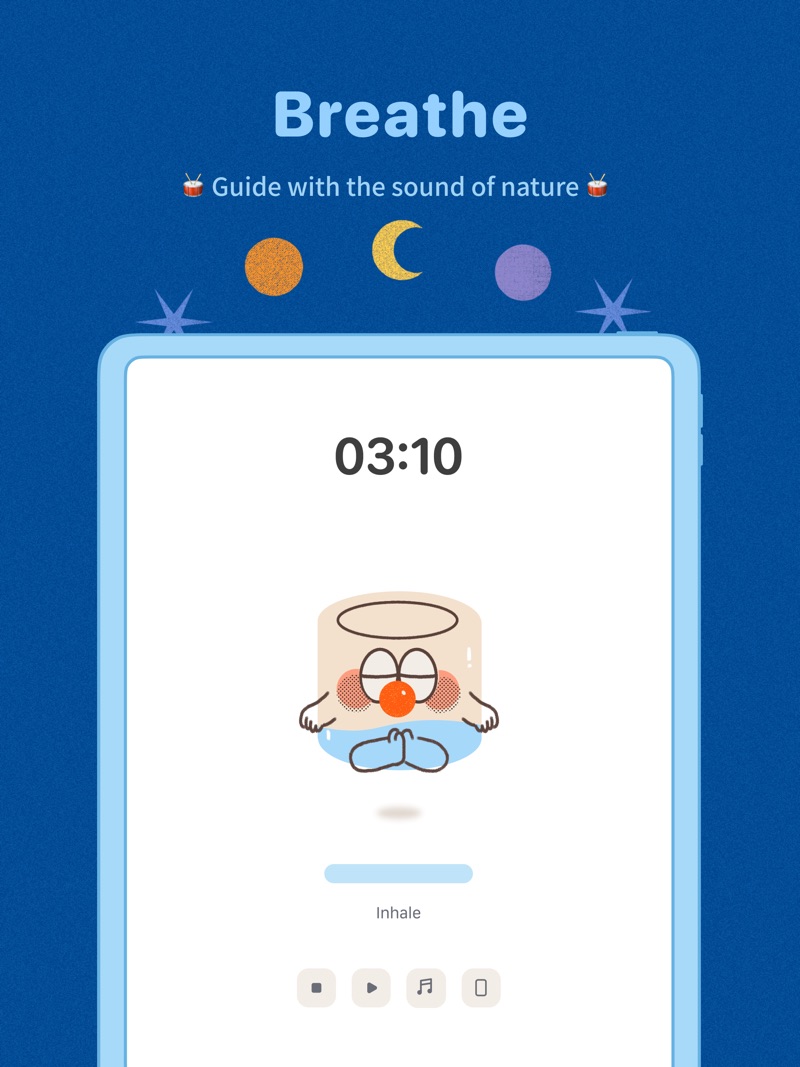
7 Best Cute Meditation Apps in 2026 — CanMindful Tops the List
Looking for an adorable, cozy meditation app? We tested seven of the cutest mindfulness apps in 2026, with CanMindful leading the pack.

Stop Chasing the Snake: Using Meditation to Heal Emotional Bites
**The "Cobra Effect" in psychology describes a common emotional trap: when hurt, we often waste energy obsessing over the source of the pain (chasing the snake) rather than tending to our wounds. This...

Yin-Yang & Five Elements Meditation Meets the Four Elements
If you have ever tried to meditate and found your mind doing parkour, you are not failing. You are just human. These old maps can give your attention something simple to hold—like handing a busy toddl...
New essays, delivered with care.
One thoughtful piece each week. No spam — just ideas worth sitting with.